Garden soil vs Potting soil
Depends on the bag
Potting soil is sold for pots; bagged garden soil is sold for beds and mixing into the ground. For indoor pots, Washington State University advises a potting mix instead of yard soil; clay-rich garden soil can drain poorly in containers.
Published · Updated
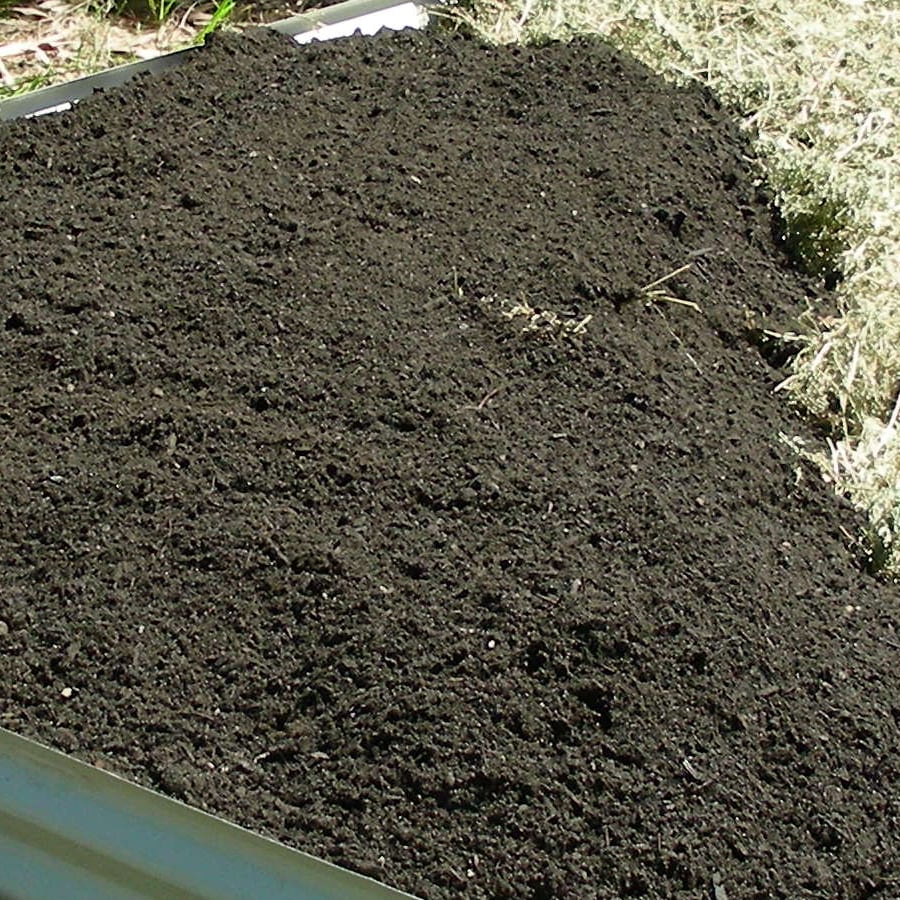
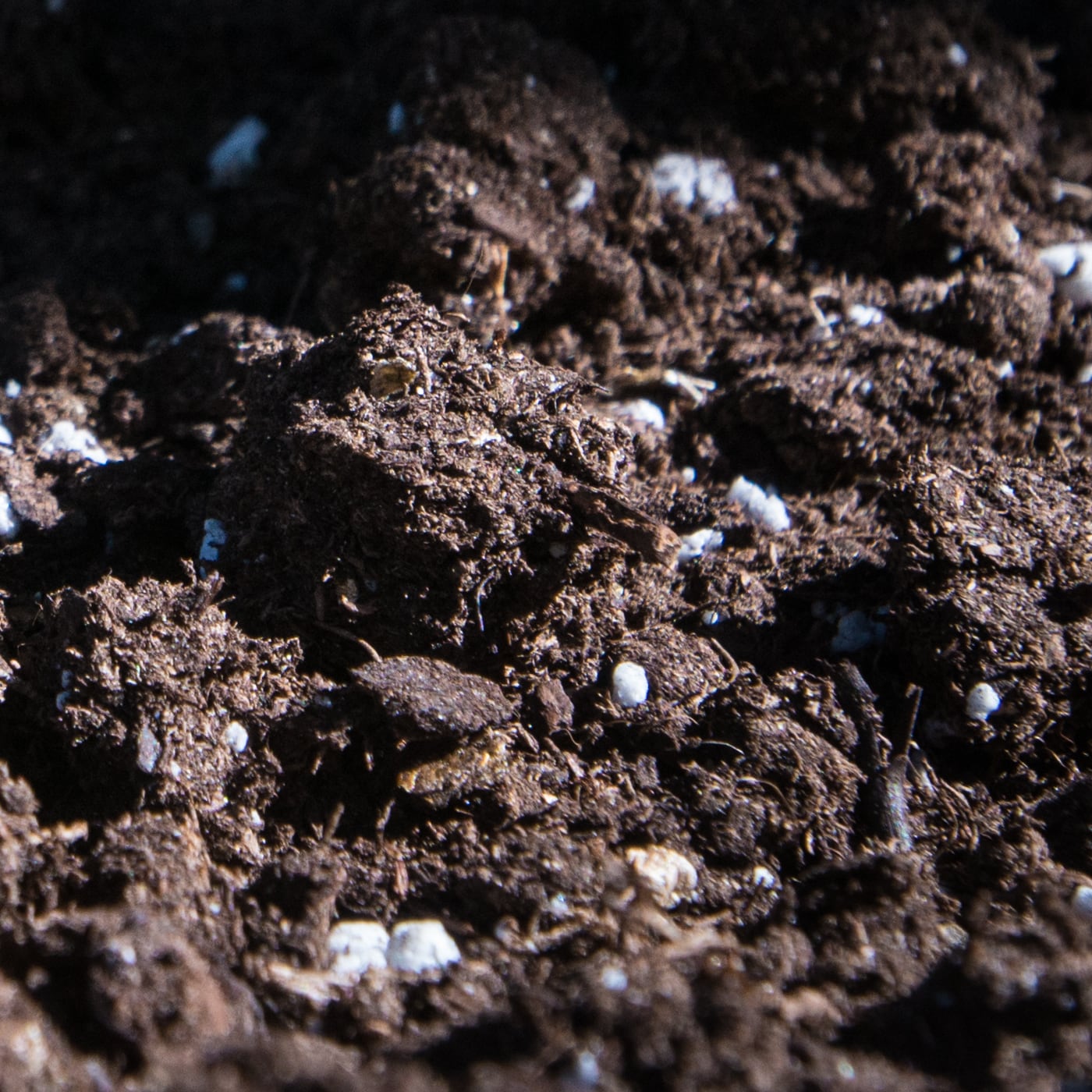
How the garden soil and potting soil labels compare
| Compare | Garden soil | Potting soil |
|---|---|---|
| Sold for | Beds and mixing into existing soil | Pots and other containers |
| Typical ingredients | Bark, compost, peat and other organic materials | Peat, coir, bark, compost or mineral ingredients |
| Contains soil? | Often none; many are all organic | Little or none in modern container mixes |
| Over time | ||
| In a pot | Case by case | Typical use |
| In a raised bed | Typical use | Sometimes used |
| In the ground | Typical use | Sometimes used |
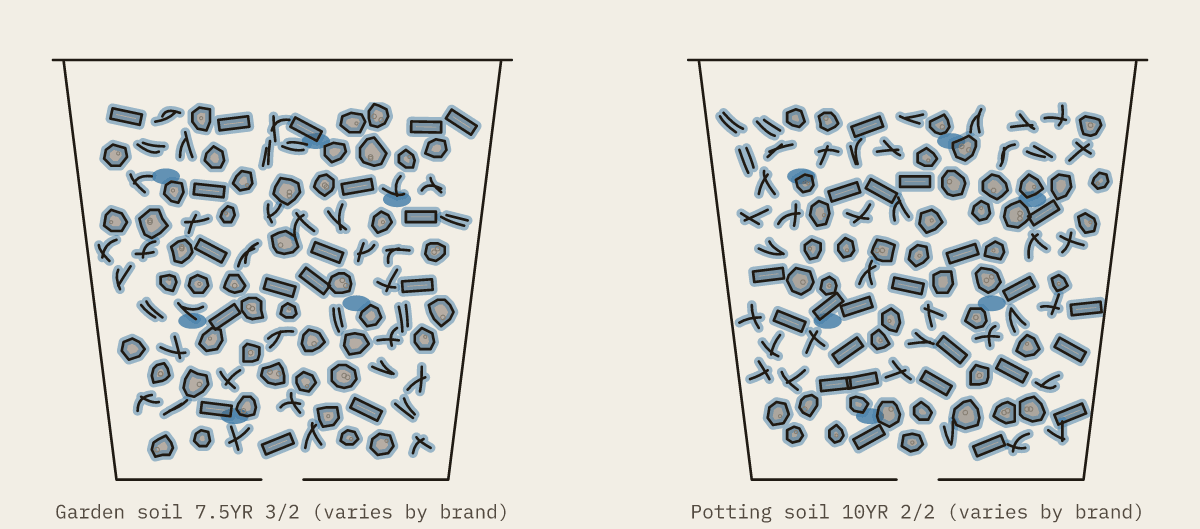
How garden soil and potting soil hold air and water
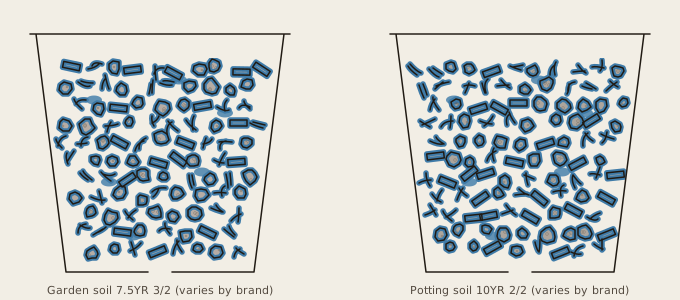
Water coats the mixed particles in both bags and fills the gaps between them.
After draining, air moves back into the larger gaps. Packing the mix down makes those gaps smaller.
As the mix dries, fewer water marks remain and more of the gaps hold air.
- Particle
- Water
- Air space
Where are you using it?
Pick a setting to see the reason behind each rating in the table.
In a pot
- Garden soil
- Case by case
- Potting soil
- Typical use
Potting soil is made for pots. A garden-soil bag is made for beds, so read its directions before filling a pot with it.
In a raised bed
- Garden soil
- Typical use
- Potting soil
- Sometimes used
Garden-soil bags are sold for beds, and Maryland Extension lists compost with a soilless growing mix as one raised-bed fill.
What is under the bed?
Open to existing soil
Loosen compacted soil below without turning it over, and blend any imported soil into it.
On a hard surface
Fill with compost and a soilless mix, adding topsoil only to a deep bed. These beds dry out quickly.
Maryland Extension gives different fill advice for a bed on open ground and a bed on a hard surface.
Illustrative sections show the base connection. They do not specify depth, fill or drainage performance.
In the ground
- Garden soil
- Typical use
- Potting soil
- Sometimes used
Garden soil is sold for mixing in. Rutgers says bagged organic growing media, potting products included, can improve soil that is low in organic matter.
What this comparison can't tell you
- Whether a garden-soil bag suits pots when its directions don't say.
- What proportions sit behind two similar ingredient lists.
- How either will behave in your own container or bed.
Compare two bags with the bag worksheet, and see what a comparison can and cannot settle.
What to look for on the bag
Selected setting: In a potIn a raised bedIn the ground
Common mix-ups about garden soil and potting soil
- “A bag of garden soil is the same as soil from the yard.”
- The bag is a manufactured product, often all organic. Yard soil is what Washington State University advises against for indoor pots.
- “Potting soil is garden soil in a bag.”
- Arkansas Extension says soil should be a minor ingredient of modern container mixes, or left out.
Which garden soil do you mean?
A bag marked garden soil
A manufactured blend, often of bark, compost and peat. Read its label for the ingredients and intended use.
Soil dug from the yard
The ground itself, which varies from place to place and with depth.
The same two words can mean a bagged product or the ground in your yard, and advice for one does not carry over to the other.
Questions about garden soil and potting soil
What are the white specks in potting soil?
Look for perlite on the ingredient list. Perlite is volcanic rock that has been heated until it expands into lightweight, popcorn-like granules. Iowa State calls perlite the most common air-space ingredient in potting mixes.
Why won’t dry potting soil soak up water?
Peat moss has traditionally been the base for most potting mixes, and it still is. A mix high in peat shrinks as it dries and can pull away from the sides of the pot. Water then runs down that gap instead of soaking in.
What helps a dry mix take up water?
Purdue says wetting agents help water spread through dry ingredients such as peat, and starter fertilizers supply nutrients at the start. Check whether a finished mix already contains either.
Sources
Each claim on this page traces to a university extension guide, agency page or published study.