Sphagnum moss vs Peat moss
Different materials
Sphagnum moss grows on top of a bog; peat moss is the partly decayed layer below. Sphagnum is sold in long strands or shredded, for lining baskets and starting plants. Peat moss is the usual base of potting mix. “Sphagnum peat moss” is peat moss.
Published · Updated
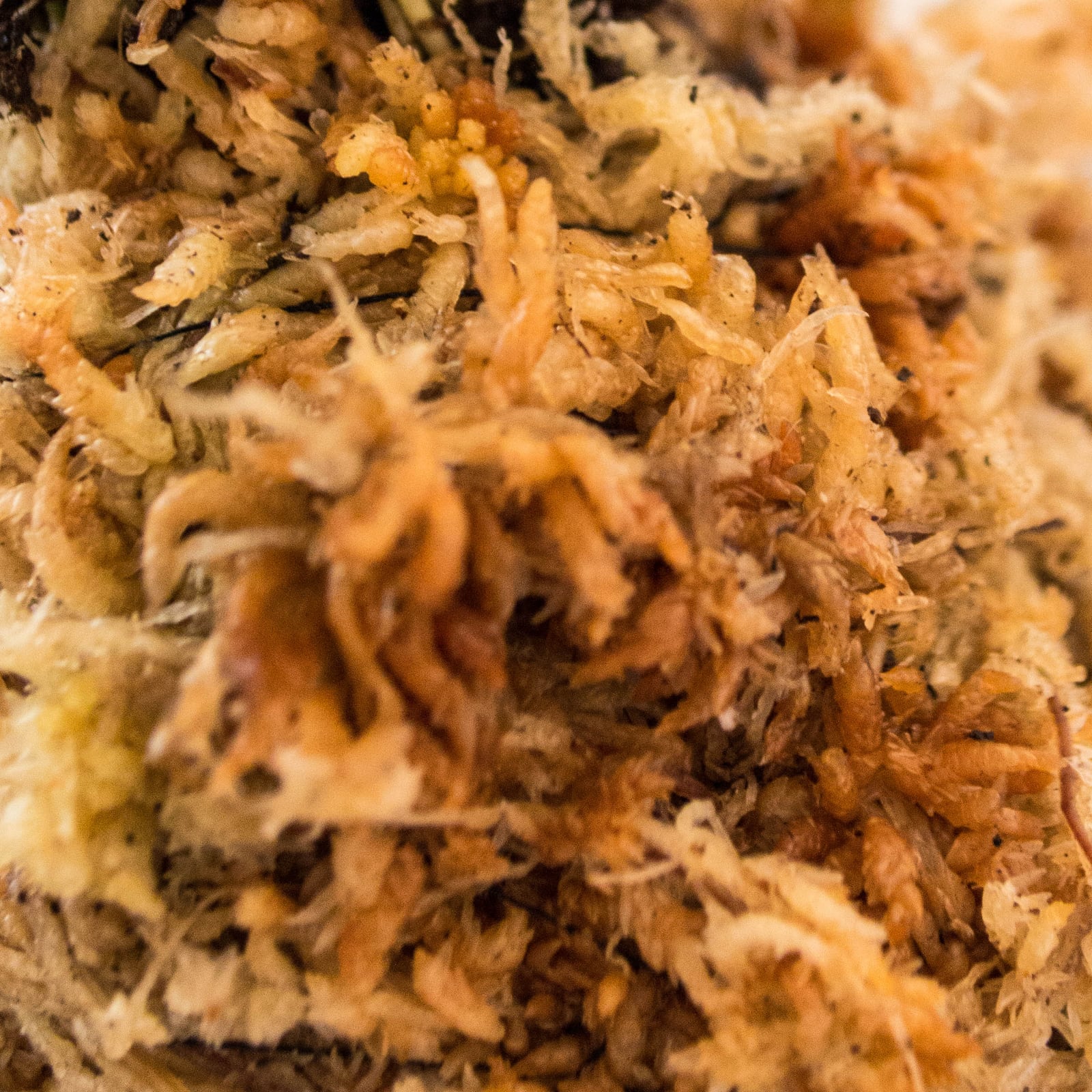
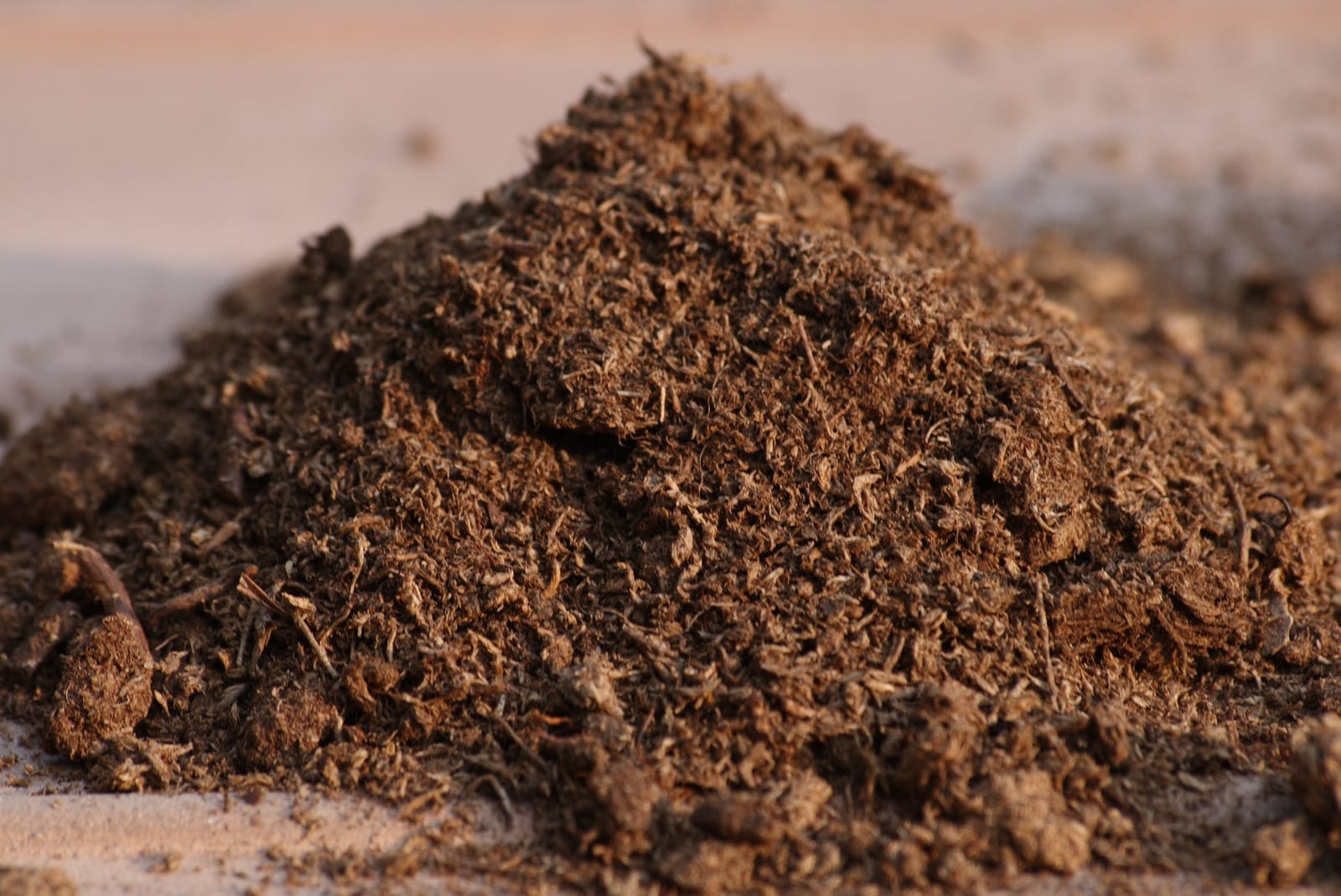
How sphagnum moss and peat moss differ
| Compare | Sphagnum moss | Peat moss |
|---|---|---|
| Where it comes from | The young or living moss at a bog's surface | Partly decayed material lower in the bog |
| How it's sold | Long strands or shredded | Loose peat, in finer and coarser grades |
| Common uses | Lining hanging baskets, air layering, starting seeds | The base of most potting mixes |
| Water and air | Coarse strands hold water and leave air spaces | Holds water; finer grades hold more water and less air |
| In a pot | Sometimes used | Typical use |
| In a raised bed | Case by case | Sometimes used |
| In the ground | Case by case | Sometimes used |
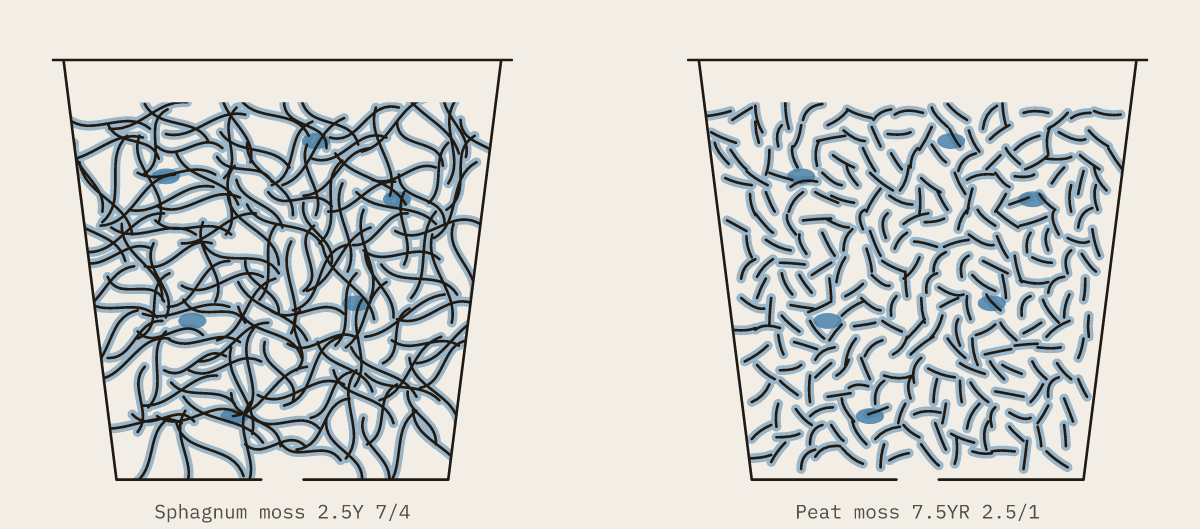
How sphagnum moss and peat moss hold air and water
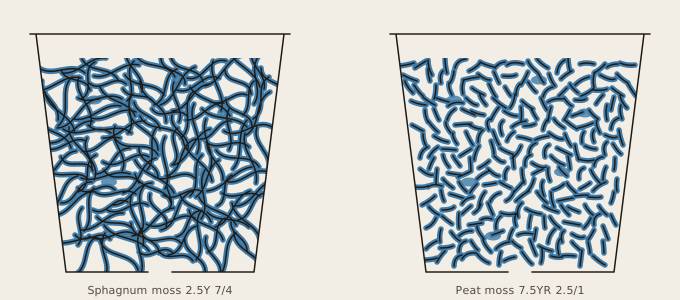
Water coats the long sphagnum strands and the fine peat fibers and fills the gaps between them.
After draining, water clings along the strands and among the peat, and air returns to the open gaps.
As they dry, fewer water marks remain in either pot.
- Particle
- Water
- Air space
Where are you using it?
Pick a setting to see the reason behind each rating in the table.
In a pot
- Sphagnum moss
- Sometimes used
- Peat moss
- Typical use
Peat moss goes into the mix itself. Shredded sphagnum is used to start seeds, and coarse sphagnum for air layering.
In a raised bed
- Sphagnum moss
- Case by case
- Peat moss
- Sometimes used
Rutgers lists sphagnum peat among the usual ingredients of bagged soil products for beds.
In the ground
- Sphagnum moss
- Case by case
- Peat moss
- Sometimes used
Iowa State describes a finer, more decomposed peat that is sold as a soil amendment.
What this comparison can't tell you
- Whether a bag labeled only “sphagnum” holds moss or peat. Look for the word peat.
- How long-fiber sphagnum rewets compared with a particular peat.
Compare two bags with the bag worksheet, and see what a comparison can and cannot settle.
What to look for on the bag
Selected setting: In a potIn a raised bedIn the ground
Common mix-ups about sphagnum moss and peat moss
- “Sphagnum peat moss means long-fiber sphagnum moss.”
- It means peat, the decayed layer. Long-fiber sphagnum moss is the living moss from the surface.
- “Any product called peat is the same.”
- Arkansas Extension lists three kinds: moss peat (peat moss), reed-sedge peat and peat humus.
Which layer of the bog is in the bag?
Surface growth → sphagnum moss
The young or living moss, sold as long strands or shredded.
Material below → peat moss
Partly decayed moss, sold as peat moss or sphagnum peat moss.
One bog, two products. The word “peat” on the bag means the lower, decayed layer.
Questions about sphagnum moss and peat moss
Why can water run down the side of a peat-filled pot?
A mix high in peat shrinks as it dries and can pull away from the sides of the pot. Water then runs down that gap instead of soaking in.
Is sphagnum moss expensive?
The University of Florida gives one drawback for sphagnum: it is expensive compared with other mix ingredients.
Sources
Each claim on this page traces to a university extension guide, agency page or published study.