Potting soil vs Potting mix
Overlapping
Potting soil and potting mix are overlapping names for the same kind of product: a bagged blend made for pots. Either can contain peat, coir, bark or compost. Despite the name, Rutgers says bagged “soil” products rarely contain mineral soil; compare ingredient lists.
Published · Updated
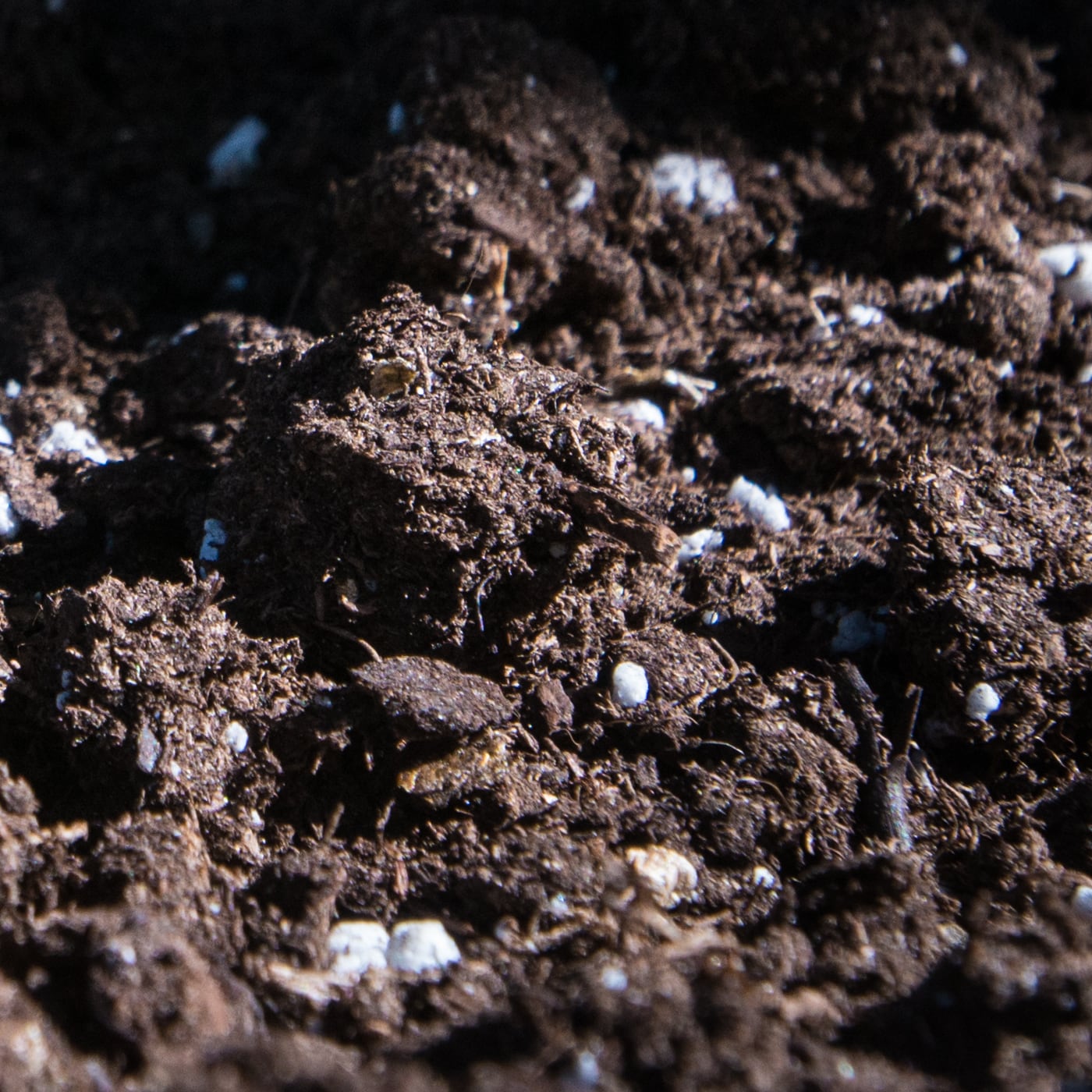
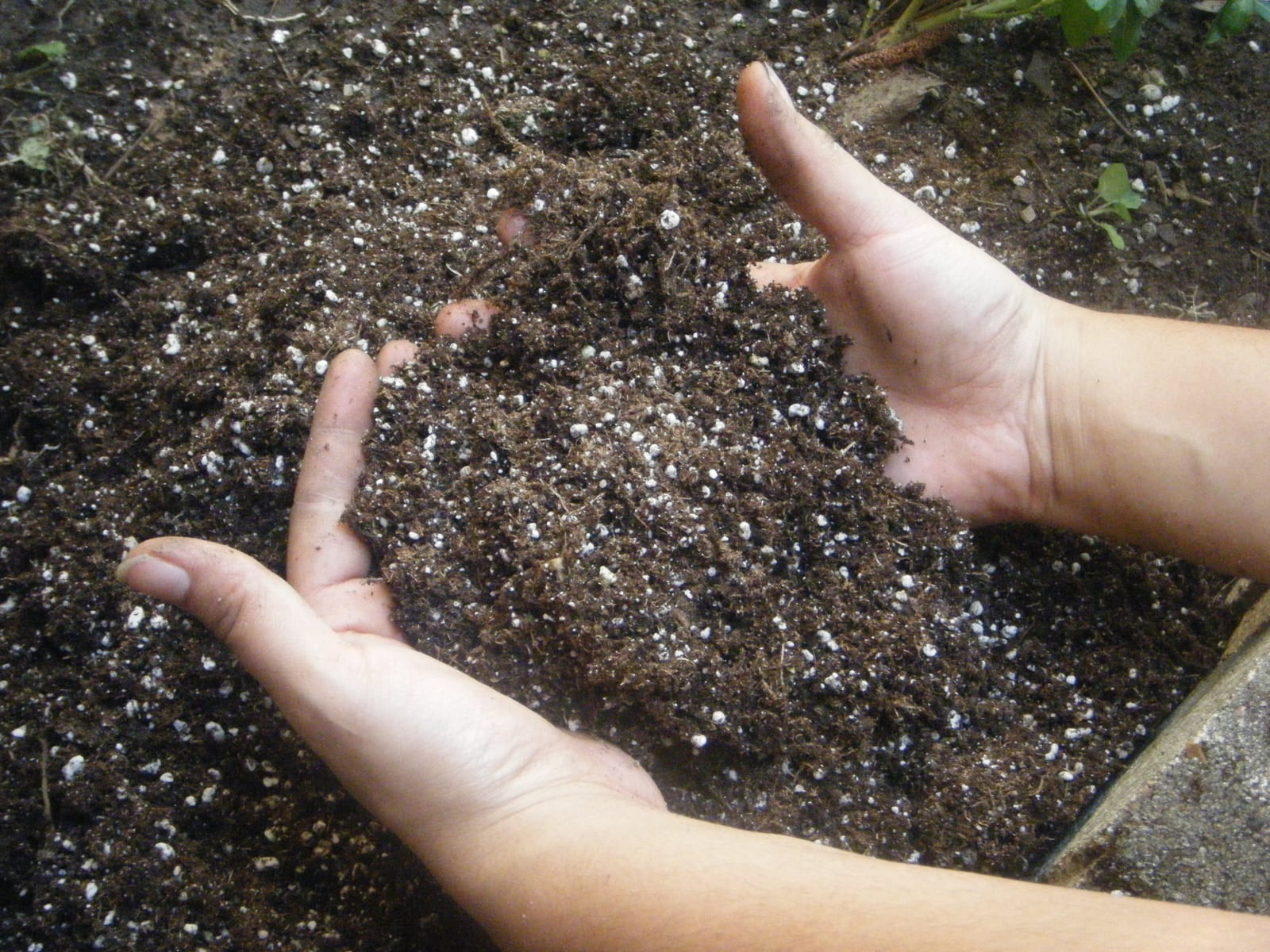
How the potting soil and potting mix labels compare
| Compare | Potting soil | Potting mix |
|---|---|---|
| Sold for | ||
| Common ingredients | ||
| Contains soil? | ||
| Fertilizer or wetting agent | ||
| In a pot | ||
| In a raised bed | ||
| In the ground | ||
How potting soil and potting mix hold air and water
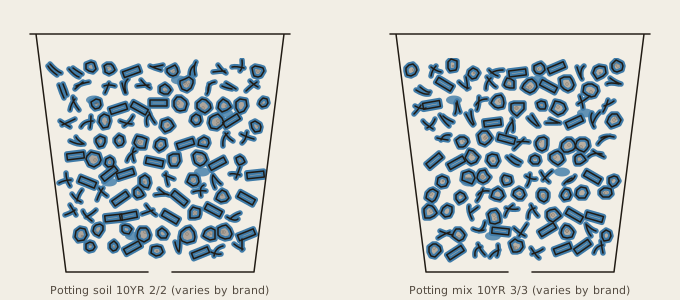
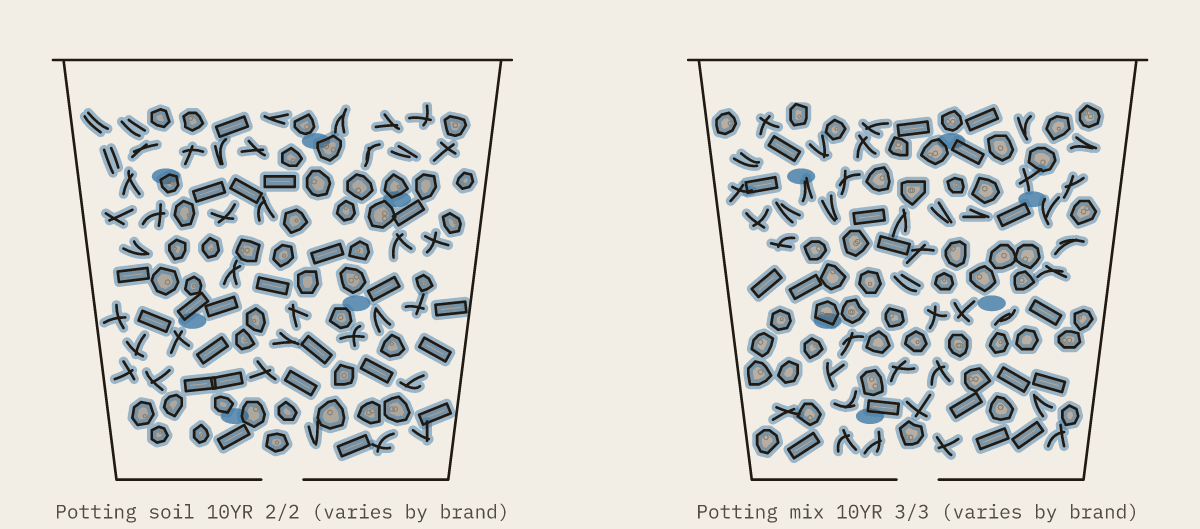
Both bags are drawn with the same mixed particles, since both names cover the same kind of blend. Water coats them and fills the gaps.
After draining, air returns to the larger gaps. Ingredients, particle sizes and how firmly the pot is filled set how much.
As the mix dries, fewer water marks remain. A peat-based mix can shrink as it dries.
- Particle
- Water
- Air space
Where are you using it?
Pick a setting to see the reason behind each rating in the table.
In a pot
- Both
- Typical use
Washington State University treats the two names alike: it advises a potting mix or potting soil made for indoor plants.
In a raised bed
- Both
- Sometimes used
Maryland Extension lists compost with a soilless growing mix as one way to fill a raised bed.
In the ground
- Both
- Sometimes used
Rutgers says bagged organic growing media can improve garden soil that is low in organic matter.
What this comparison can't tell you
- Whether two products use the same recipe or particle sizes.
- How much fertilizer or wetting agent a bag holds when the label doesn't say.
Compare two bags with the bag worksheet, and see what a comparison can and cannot settle.
What to look for on the bag
Selected setting: In a potIn a raised bedIn the ground
Common mix-ups about potting soil and potting mix
- “Potting soil contains soil; potting mix doesn't.”
- The names don't settle that. Look for soil or sand in the ingredient list.
- “Two bags with the same name perform the same.”
- A study of retail potting media found differences between brands, and in seed germination between bags of one brand.
Questions about potting soil and potting mix
Can you use soil from the garden instead?
Washington State University advises using a potting mix made for indoor pots instead of soil from the garden, and warns that garden soils with a lot of clay can drain poorly in containers.
Why does the mix sink in the pot over time?
Purdue notes that a mix shrinks after you fill the pot, so its level drops. Organic ingredients break down in a pot over time. Larger pieces become fine particles that hold more water and leave less room for air, so the mix changes as it ages.
Should you press the mix into the pot?
Pressing a mix down can sharply cut its air space; UMass Extension calls avoiding compaction the major concern.
Sources
Each claim on this page traces to a university extension guide, agency page or published study.