Perlite vs Vermiculite
Different materials
Perlite adds air space and drainage to a mix; vermiculite mainly holds water and some nutrients. Perlite is volcanic rock puffed up by heat into light, popcorn-like granules. Vermiculite is a layered mineral heated into shiny flakes, and it adds some air too.
Published · Updated
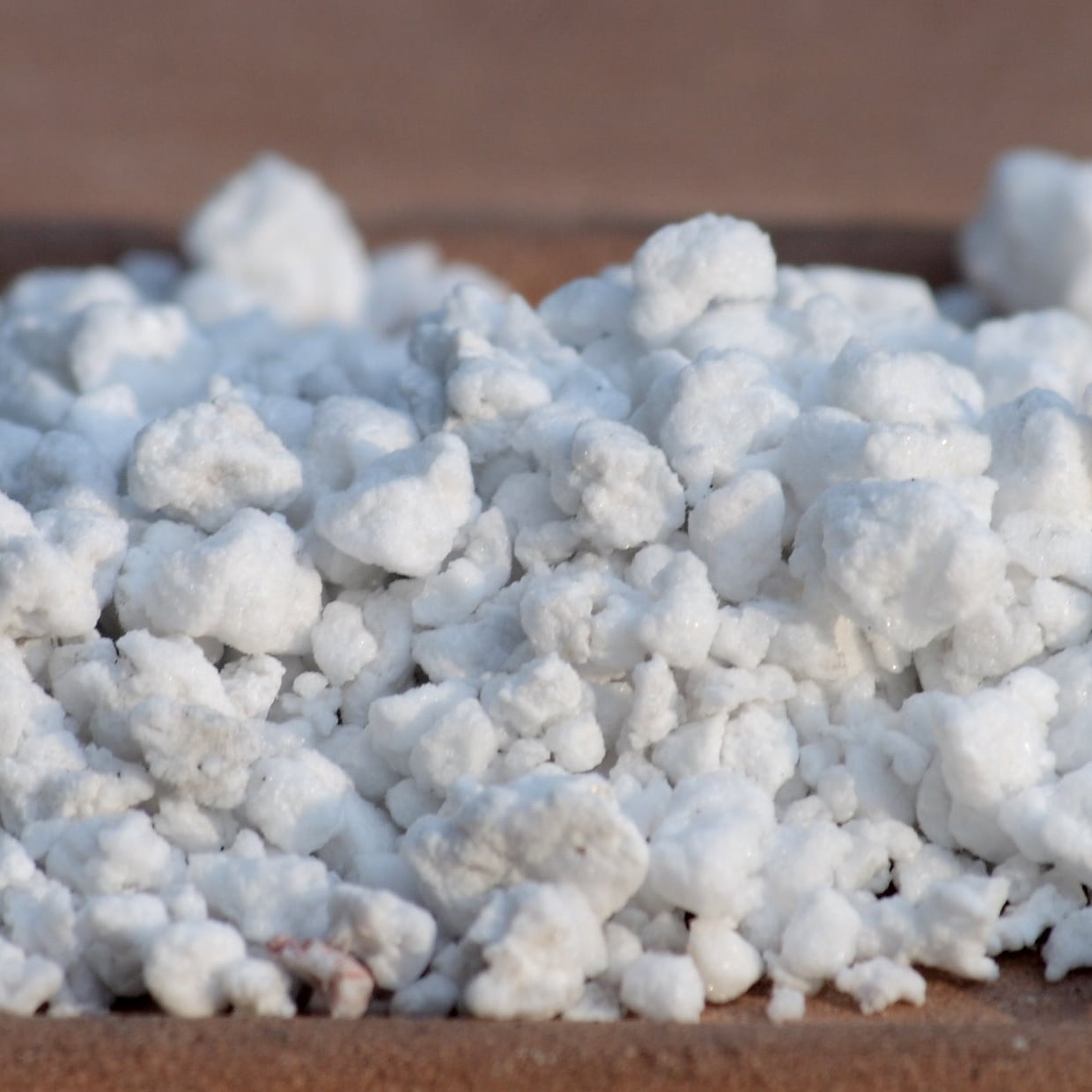
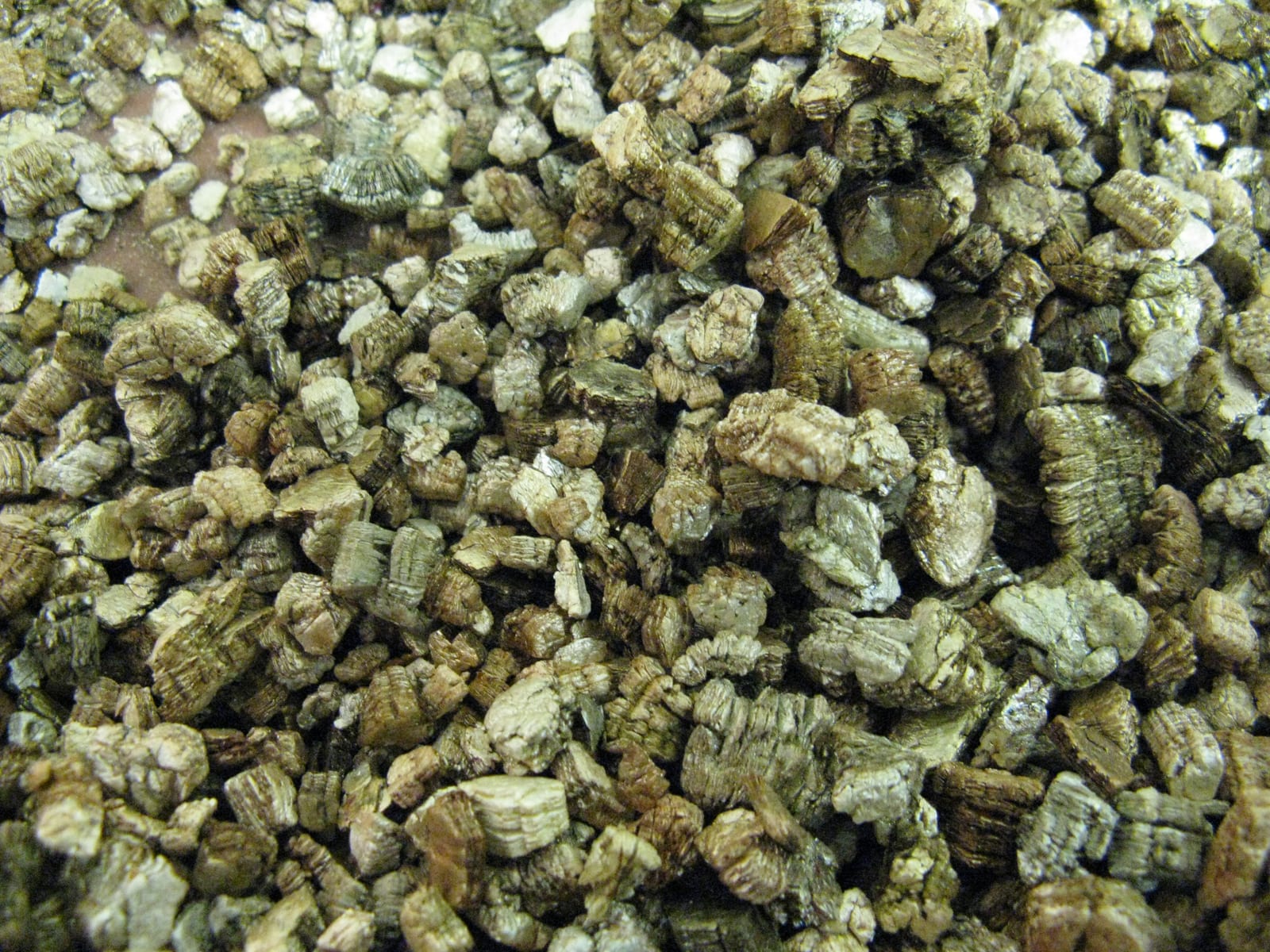
How perlite and vermiculite differ
| Compare | Perlite | Vermiculite |
|---|---|---|
| What it is | Volcanic rock puffed into popcorn-like granules | Layered mineral expanded into shiny flakes |
| Main job in a mix | Air space and drainage | Holding water and some nutrients |
| Common uses | Potting and propagation mixes; a finer grade for seedling trays | Fine grades for starting seeds and covering them after sowing |
| Air space | Adds air space that lasts | Adds some air space as well |
| Over time | Does not decompose; handling can break it into smaller pieces | Can pack down and lose air space |
| Dust | Can be dusty; a mask is advised for large amounts | The EPA advises using it damp, outdoors or with good airflow |
| In a pot | ||
| In a raised bed | ||
| In the ground | ||
How perlite and vermiculite hold air and water
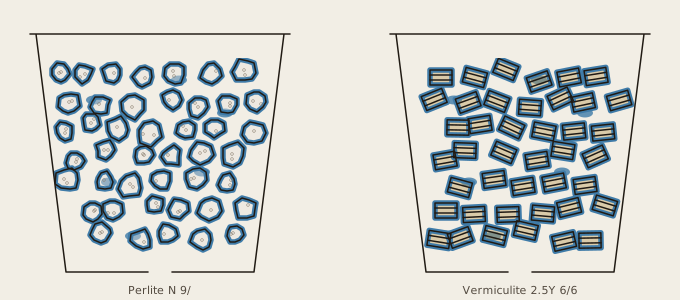
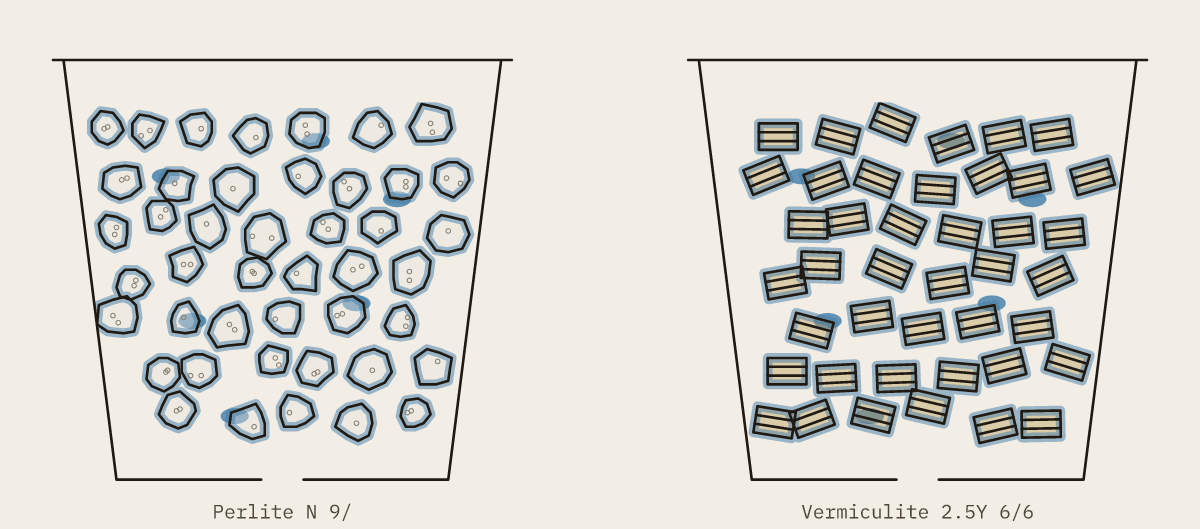
Just after watering, water coats the popcorn-shaped perlite and the stacked vermiculite flakes and fills many of the gaps between them.
Once the pot drains, air moves back into the larger gaps while water clings to the particles. Perlite is there for the air; vermiculite for the water.
As the mix dries, fewer water marks remain in either pot and air fills more of the gaps.
- Particle
- Water
- Air space
Where are you using it?
Pick a setting to see the reason behind each rating in the table.
In a pot
- Both
- Typical use
Both are common potting-mix ingredients, and Purdue lists mixes that contain both. Iowa State calls perlite the most common air-space ingredient.
In a raised bed
- Both
- Case by case
Maryland Extension describes filling raised beds with compost and a soilless mix, or with topsoil and compost. A soilless mix may already include perlite or vermiculite.
In the ground
- Both
- Case by case
Rutgers describes improving soil that is low in organic matter with organic materials. It gives no general rule for mixing perlite or vermiculite into the ground.
What this comparison can't tell you
- Which grade is in a bag that doesn't state one.
- Whether the mix you already have needs either one.
- Whether a particular vermiculite product contains contaminants. The EPA's handling advice is listed on the Sources page.
Compare two bags with the bag worksheet, and see what a comparison can and cannot settle.
What to look for on the bag
Selected setting: In a potIn a raised bedIn the ground
Common mix-ups about perlite and vermiculite
- “Perlite is plastic foam.”
- It is volcanic rock, heated until it expands.
- “Pressing the mix down firmly helps it.”
- Packing sharply cuts air space, and Arkansas Extension advises against pressing vermiculite down.
- “A bagged potting mix needs vermiculite added.”
- Read the ingredients first. Iowa State calls vermiculite likely unnecessary in a good-quality mix used with a fertilizer program.
Questions about perlite and vermiculite
Can one replace the other?
They do different jobs: Arkansas Extension says perlite is added to improve drainage, while vermiculite holds large amounts of water and nutrients. Purdue describes seed-starting mixes made with either fine perlite or vermiculite, and Washington State University describes houseplant mixes with either one.
Why does perlite end up on top of the pot?
Perlite is very lightweight. Purdue notes that perlite tends to float to the top of a mix.
How much air does packing take out?
The same mix holds far less air when it is packed down. Iowa State reports 15 percent air space when the pot was filled and brushed level, 9 percent after tapping it twice and 4 percent when the mix was pressed down.
Why is the bottom of a pot wetter than the top?
After a pot drains, the mix at the bottom stays wetter than the mix above it. Iowa State explains that smaller pores raise this wet layer, and a taller pot leaves more mix above it.
Sources
Each claim on this page traces to a university extension guide, agency page or published study.