Topsoil vs Garden soil
Depends on the bag
Topsoil is mineral soil used as fill; bagged garden soil is often an organic blend for mixing into beds. Maryland Extension says bags sold as “organic soil” typically contain no topsoil. Topsoil usually comes in bulk; ask the supplier for its origin and soil tests.
Published · Updated
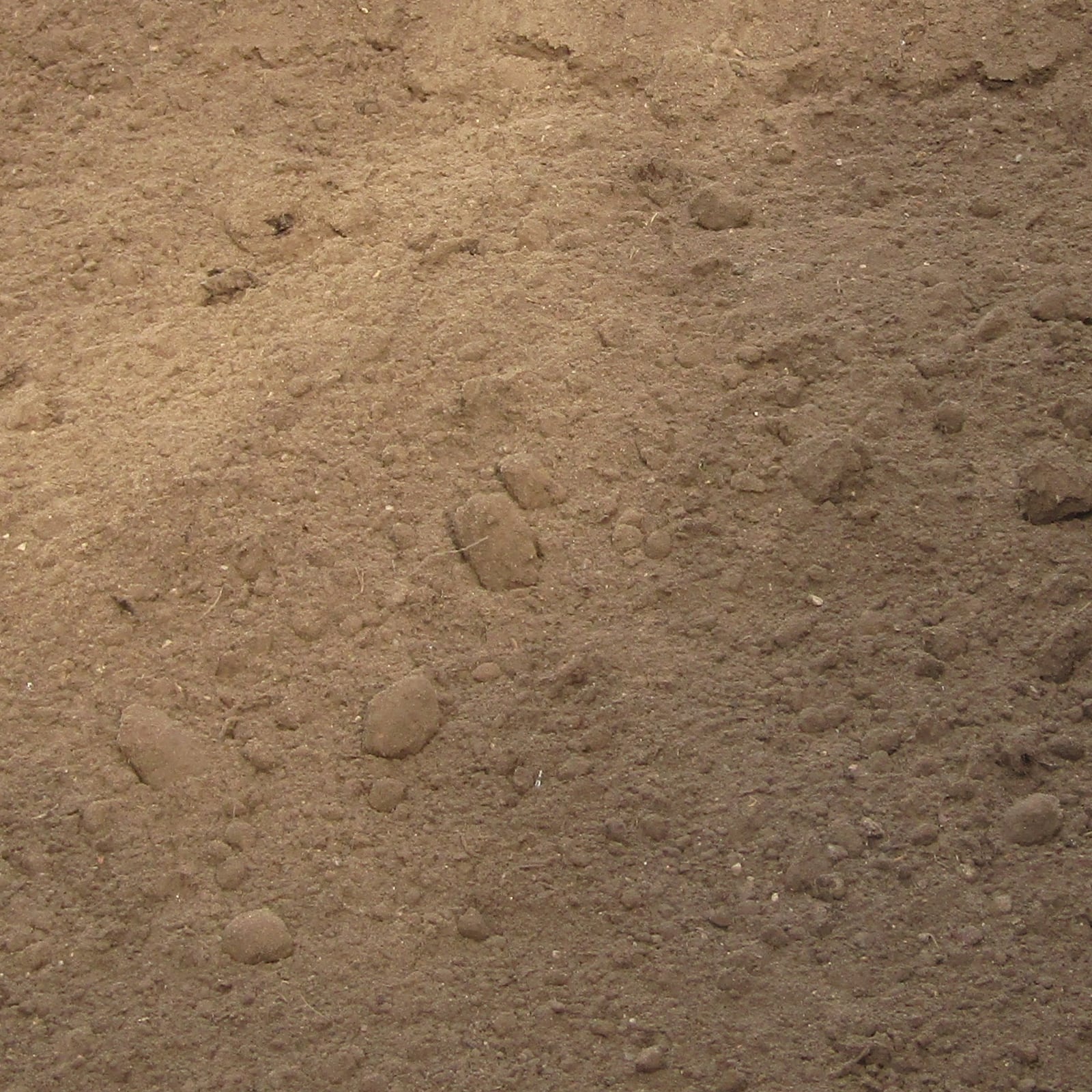
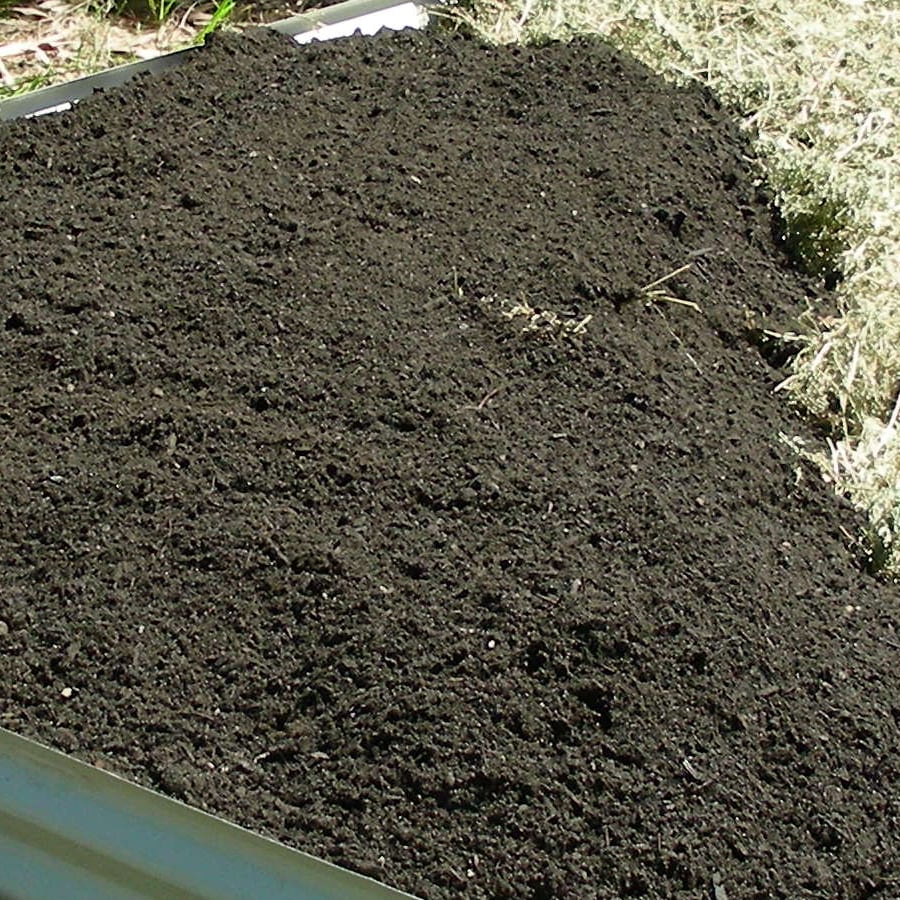
How the topsoil and garden soil labels compare
| Compare | Topsoil | Garden soil |
|---|---|---|
| Made of | Sand, silt and clay, often with compost added | Often only organic materials, such as bark, compost and peat |
| Main job | Fill for beds | Adding organic matter to beds and existing soil |
| What makes it vary | Where and how deep it was dug | Each brand's recipe |
| Where the details are | Supplier records: origin, blending, soil tests | The bag label |
| In a pot | Usually a mismatch | Case by case |
| In a raised bed | Typical use | Sometimes used |
| In the ground | ||
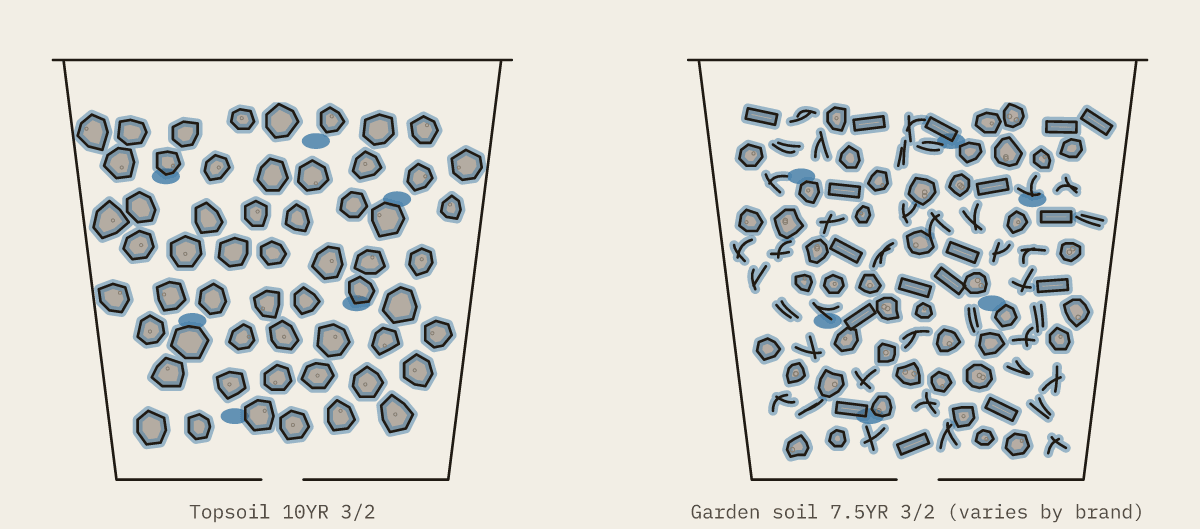
How topsoil and garden soil hold air and water
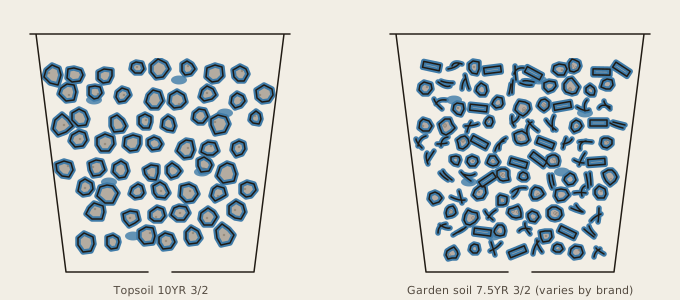
Topsoil is drawn as crumbs and garden soil as mixed pieces. Water coats both and fills the gaps.
After draining, air returns to the spaces between crumbs and pieces. Topsoil's structure depends on where it came from.
As both dry, fewer water marks remain.
- Particle
- Water
- Air space
Where are you using it?
Pick a setting to see the reason behind each rating in the table.
In a pot
- Topsoil
- Usually a mismatch
- Garden soil
- Case by case
Arkansas Extension says soil should be a minor ingredient of a container mix, or left out. Read a garden-soil bag's directions before using it in a pot.
In a raised bed
- Topsoil
- Typical use
- Garden soil
- Sometimes used
Maryland Extension's raised-bed fills include topsoil amended with compost. A garden-soil bag can supply that organic matter.
What is under the bed?
Open to existing soil
Loosen compacted soil below without turning it over, and blend any imported soil into it.
On a hard surface
Fill with compost and a soilless mix, adding topsoil only to a deep bed. These beds dry out quickly.
Maryland Extension gives different fill advice for a bed on open ground and a bed on a hard surface.
Illustrative sections show the base connection. They do not specify depth, fill or drainage performance.
In the ground
- Both
- Typical use
Topsoil can be brought in as fill; bagged garden soil is sold for mixing into existing soil.
What this comparison can't tell you
- What a bulk load contains without the supplier's information.
- The share of compost in a bag that doesn't state it.
- Whether your bed needs fill, an amendment or neither.
Compare two bags with the bag worksheet, and see what a comparison can and cannot settle.
What to look for on the bag
Selected setting: In a potIn a raised bedIn the ground
Common mix-ups about topsoil and garden soil
- “Every bag labeled topsoil contains mineral soil.”
- Rutgers warns that bag names are confusing, and many bagged products are all organic. Read the ingredients.
- “Garden soil on a bag means soil from a garden.”
- The bag is a manufactured product; soil dug from a garden is a different material.
Buying by the bag or by the load?
Buying a bag
Read the ingredient list and stated use. Ask the manufacturer about anything missing.
Ordering bulk soil
Ask for its origin, blending, storage and soil-test results, and look at it before delivery.
A bag has a label. A bulk load does not, so its details come from the supplier.
Questions about topsoil and garden soil
Can a soil test check a bagged blend?
Tell the lab whether your sample is mineral soil, potting mix or compost. Rutgers uses a different chemical test for organic growing media than for mineral soil, so one test does not suit every material.
Can garden soil replace the soil in a bed?
Rutgers says bagged organic growing media can improve mineral soil that is low in organic matter. That is a soil-improvement use; it does not make every bag a replacement for your existing soil.
Sources
Each claim on this page traces to a university extension guide, agency page or published study.