Perlite vs Pumice
Different materials
Perlite and pumice are both volcanic rock added to container mixes for air space, and neither decomposes the way organic ingredients do. Perlite is heated until it puffs into very light granules. Pumice is mined, crushed and sorted by size, and is used less widely.
Published · Updated
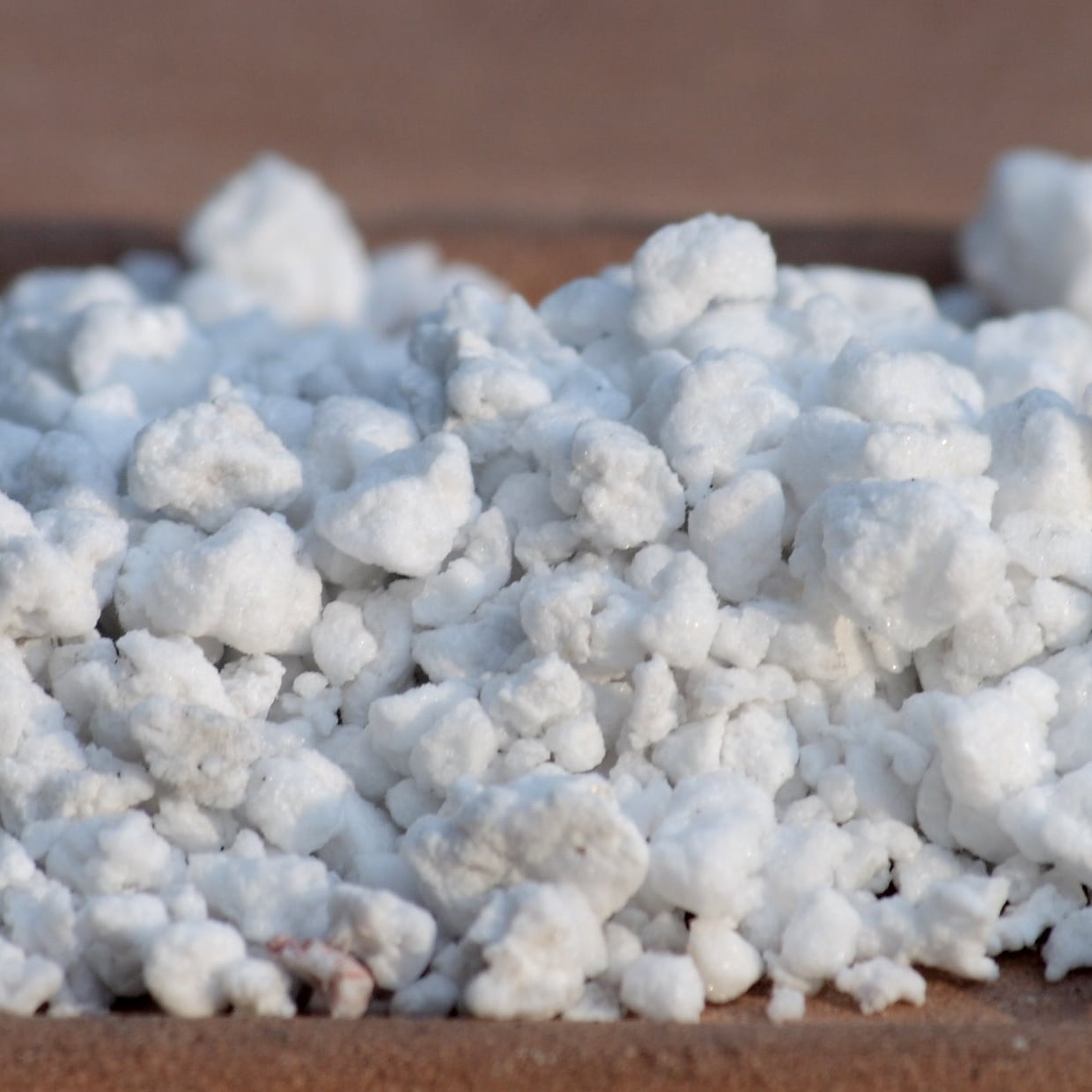
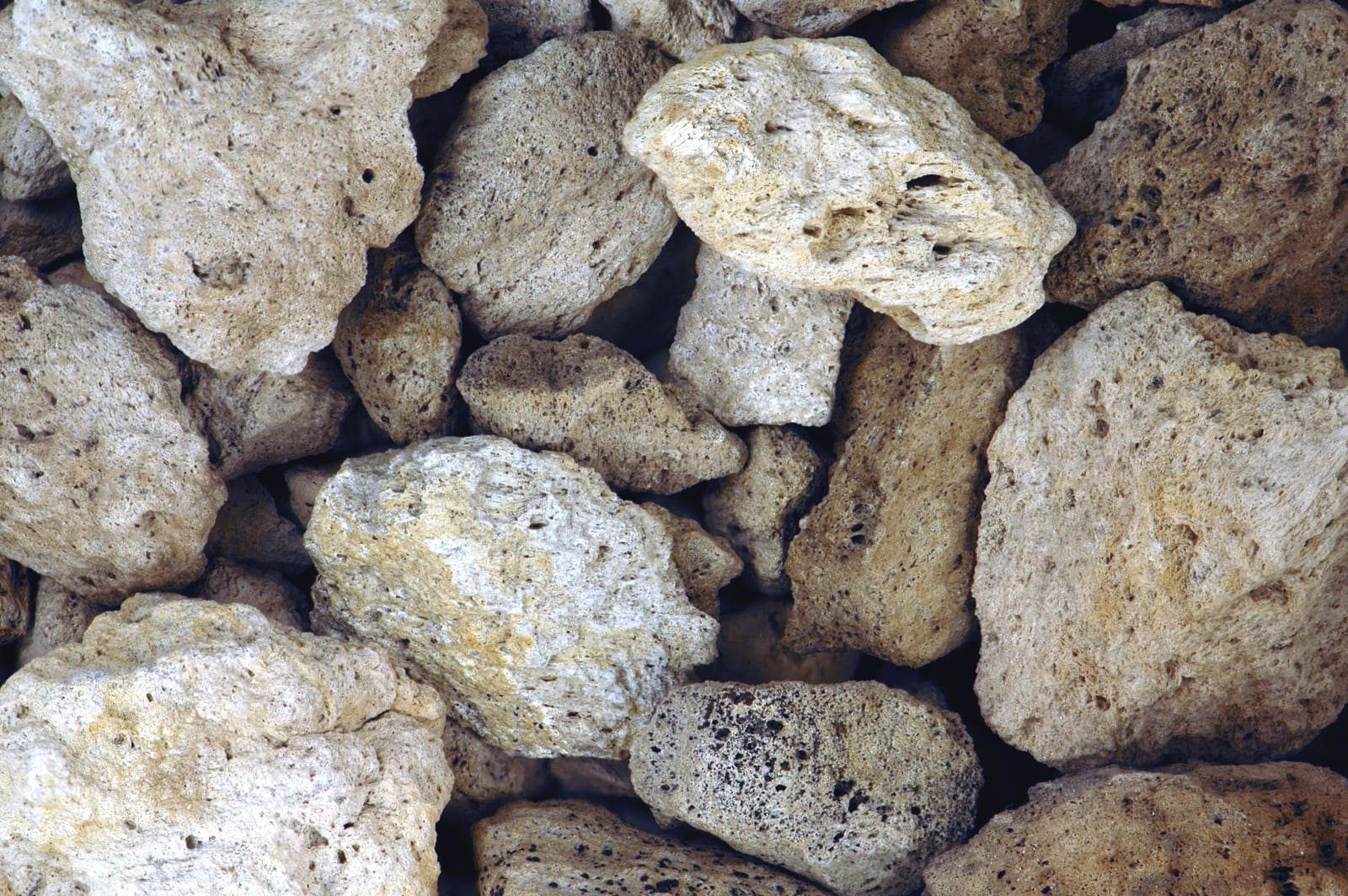
How perlite and pumice differ
| Compare | Perlite | Pumice |
|---|---|---|
| How it's made | Volcanic rock heated until it expands | Volcanic rock mined, crushed and graded by size |
| Main job in a mix | ||
| Texture | Popcorn-like granules | Porous, crushed pieces |
| Weight | Very lightweight; tends to float to the top of a mix | Described as lightweight; not compared with perlite |
| How widely used | The most common air-space ingredient | Used less widely |
| In a pot | ||
| In a raised bed | ||
| In the ground | ||
How perlite and pumice hold air and water
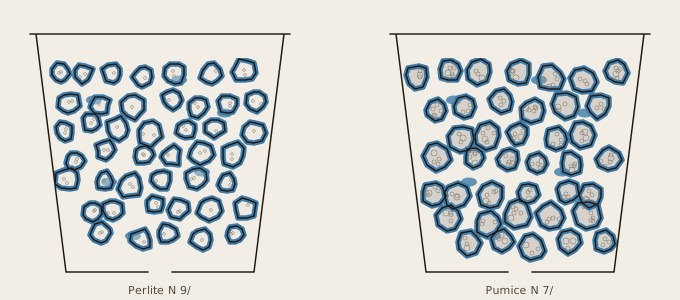
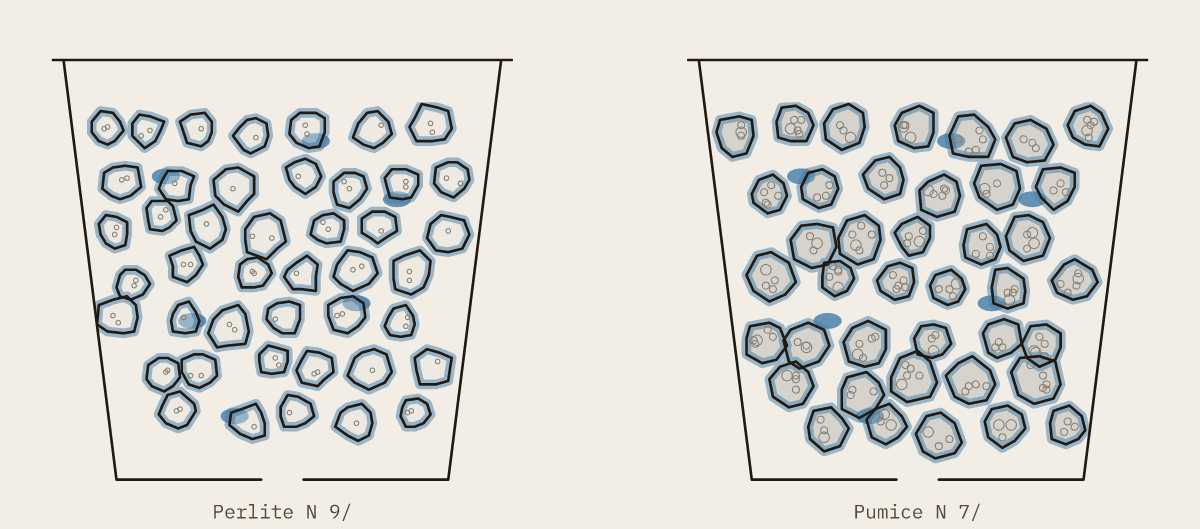
Water coats the popcorn-shaped perlite and the pitted pumice pieces and fills the gaps between them.
After draining, air returns to the gaps between the rock pieces. Keeping those gaps open is the job both are added for.
As the mix dries, fewer water marks remain on either rock.
- Particle
- Water
- Air space
Where are you using it?
Pick a setting to see the reason behind each rating in the table.
In a pot
- Both
- Typical use
Purdue lists both as air-space ingredients for container mixes; Iowa State calls perlite the most common one.
In a raised bed
- Both
- Case by case
Maryland Extension describes filling raised beds with compost and a soilless mix, or with topsoil and compost, not with perlite or pumice alone.
In the ground
- Both
- Case by case
For garden soil low in organic matter, Rutgers describes adding organic materials. It gives no general rule for adding perlite or pumice.
What this comparison can't tell you
- Which is heavier at the grade and moisture you'll use.
- Which grade suits the mix you already have.
- How much water a finished mix holds, from the name of its rock ingredient.
Compare two bags with the bag worksheet, and see what a comparison can and cannot settle.
What to look for on the bag
Selected setting: In a potIn a raised bedIn the ground
Common mix-ups about perlite and pumice
- “Pumice is a heavier grade of perlite.”
- They are made differently: perlite is expanded by heat, while pumice is crushed and graded without being expanded.
- “Rock ingredients wear out like the rest of the mix.”
- Perlite and pumice do not decompose, or break down only slowly, which helps keep air spaces open over time.
Questions about perlite and pumice
Does either one float?
Purdue notes that perlite tends to float to the top of a mix. The University of Florida and Purdue describe pumice as lightweight, but neither compares its weight with a particular grade of perlite.
Can pumice stand in for perlite?
Bilderback and colleagues list perlite and pumice among the coarse aggregates that can be used in potting mixes. These sources do not compare a particular grade of one with the other, so compare the particle sizes listed on the bags.
Does perlite hold water?
Arkansas Extension says perlite granules are closed cells that do not absorb or hold water. The University of Florida describes perlite used as a growing medium as holding water well. Neither gives a measurement for water inside a single granule.
Is perlite dusty?
Perlite can be dusty; the University of Florida recommends a mask when handling large quantities.
Sources
Each claim on this page traces to a university extension guide, agency page or published study.